
Lightweight Engineering for Stronger Infrastructure
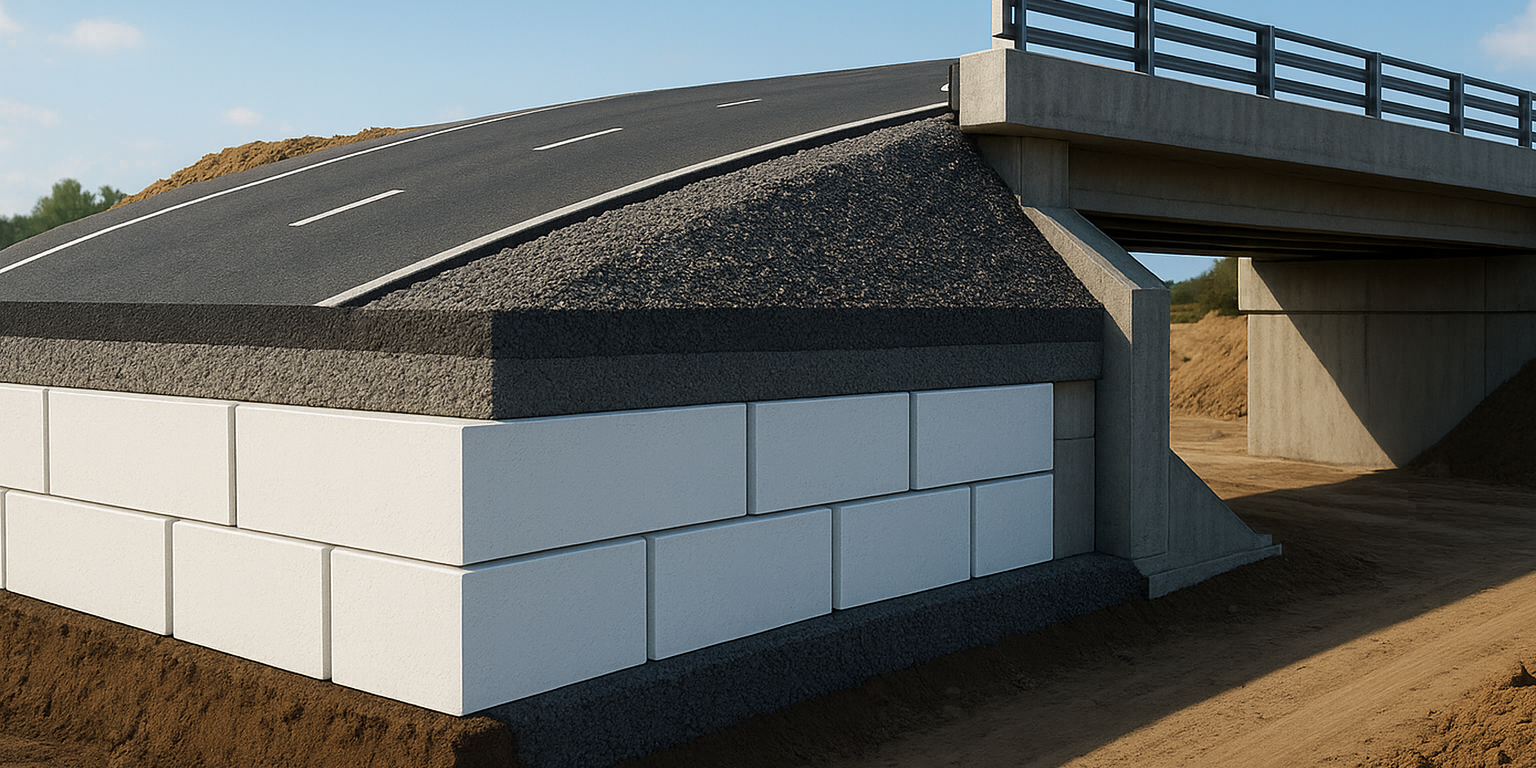
EPS Geofoam is a game-changing solution for road and bridge construction, offering up to 100 times less weight than conventional soils while delivering structural strength. By replacing heavy fill with engineered foam blocks, engineers eliminate settlement risk and reduce load on weak soils—especially in areas with buried utilities or challenging terrain.
Why Geofoam Is Ideal for Roads & Bridges
- Minimizes Load on Weak Soil Heavy fills can overload soft ground, leading to differential settlement, utility damage, and infrastructure failure. Geofoam’s dramatically lower weight (as low as 1%–2% of soil’s density) significantly reduces vertical stress on subgrade layers.
- Speeds Up Project Schedules Geofoam arrives factory-cut and ready to install—no compaction, curing, or settling. This streamlined workflow can cut construction time by weeks or even months, helping projects stay on schedule, even in adverse weather.
- Reduces Lateral Pressure on Retaining Structures Replacing heavy fill behind retaining walls or bridge abutments with Geofoam slashes lateral earth pressure by up to 90%. That enhances stability and may allow for lighter wall designs, translating to further savings.
- Frost Heave Protection & Thermal Insulation In cold climates, Geofoam acts as a thermal barrier beneath pavements, reducing frost heave and extending the life of road surfaces. Its insulating properties also contribute to long-term performance.
- Predictable, Engineered Performance Unlike variable soils, Geofoam blocks are manufactured under strict quality control (ASTM D6817), providing reliable compressive strength, dimensional stability, and uniform behavior under load.
- Eco-Friendly & Recyclable EPS Geofoam is inert, non-toxic, and recyclable. It contains no harmful chemicals like CFCs or HFCs, and its low density reduces transportation emissions and eliminates the need for heavy machinery on site.
Technical & Installation Overview
Installation Process:
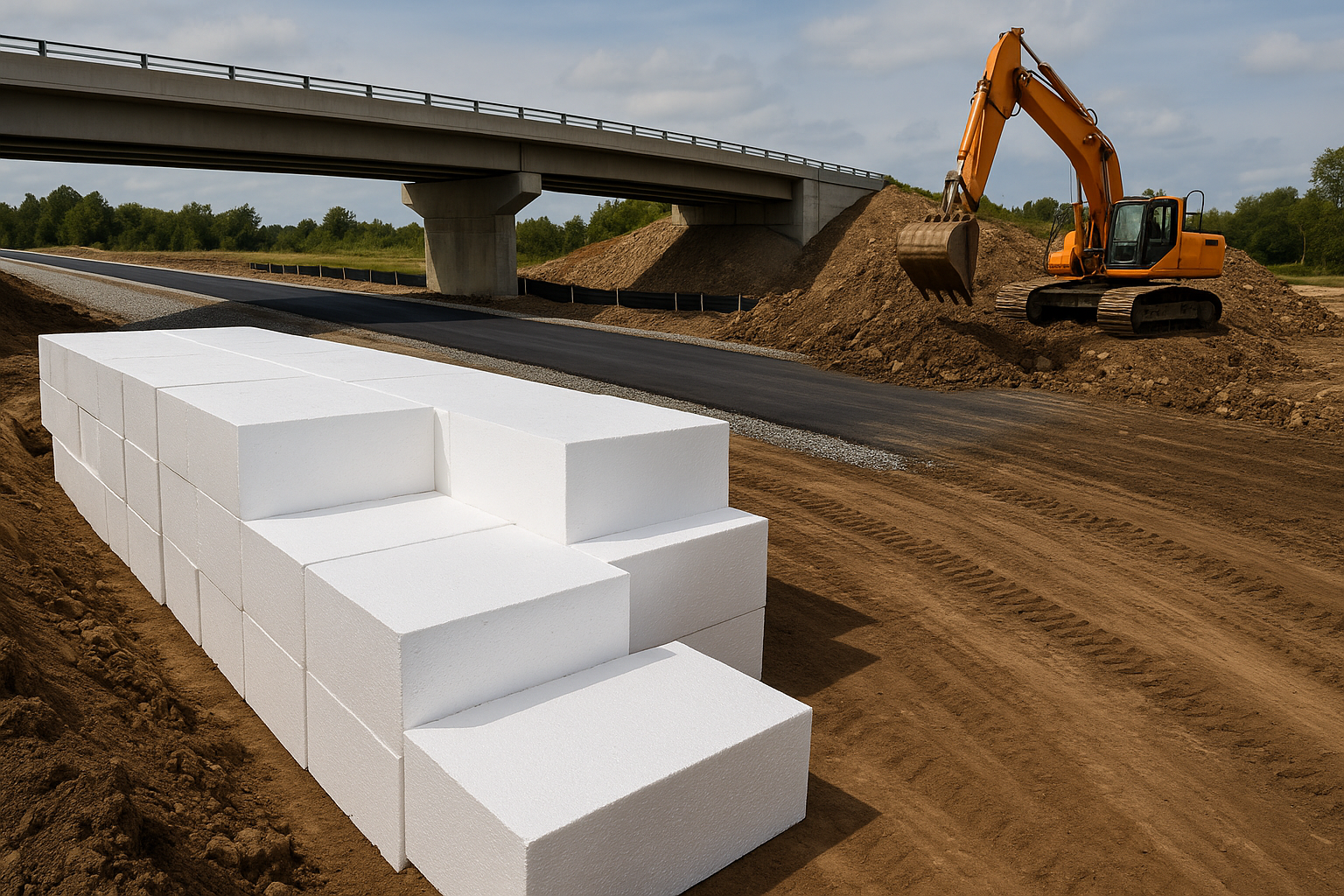
- Level the base with a sand leveling layer.
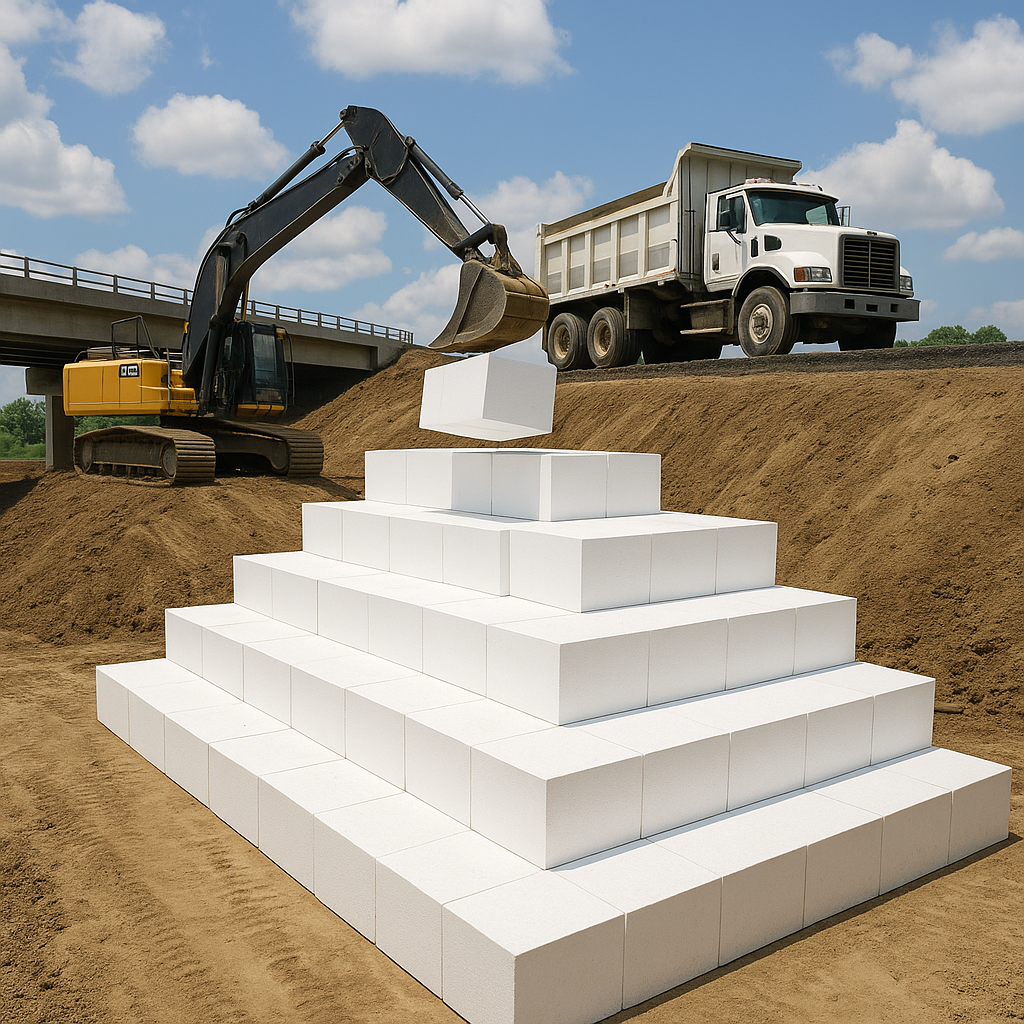
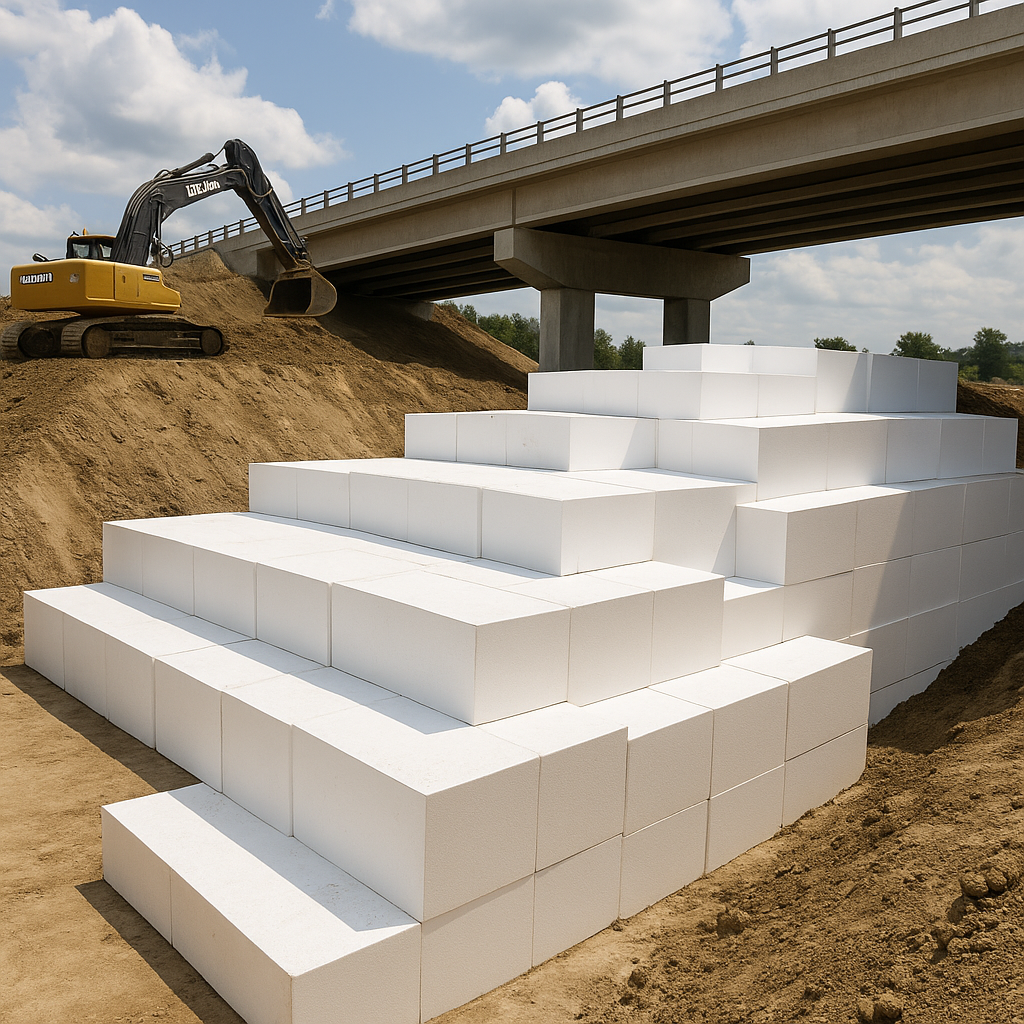
- Stagger Geofoam block vertical joints to prevent structural seams.
- If needed, place separation or reinforcement layers above Geofoam (e.g., geomembrane or concrete slab) to protect from incidental loads and hydrocarbons.
Design Features:
Geofoam supports traffic loading and meets compressive resistance requirements up to ASTM-defined strength levels. Installation is fast, with no compaction or testing delays typically required on-site.
Applications in Road & Bridge Construction
Its inert nature makes Geofoam resistant to moisture, freeze-thaw damage, and biological degradation. It’s also ideal for LEED or sustainability-focused projects.
EPS Geofoam is a high-performance solution for modern road and bridge construction—offering lightweight strength, faster installation, frost protection, and predictable engineering results. It’s an especially effective alternative in projects involving soft soil, utility corridors, slopes, or tight timelines.
To learn how Geofoam can optimize your next infrastructure project, contact us for custom sizing, technical guidance, and installation support.
Roadway Embankments & Widening Projects
Use Geofoam to expand embankments without overloading adjacent structures or utilities. This method is particularly effective in right-of-way constrained or utility-rich areas, such as roadway widening projects.
Bridge Approach Fills & Abutments
Geofoam provides stable, lightweight support for bridge approach slabs and abutment fills. Because it avoids increasing stress on the underlying soil, it helps prevent differential settlement where roads meet bridge structures .
Retaining Walls & High Slopes
Geofoam is ideal for steep slopes or tall retaining walls, where heavy backfill would otherwise increase lateral load. Its use can reduce pressure and simplify slope engineering .
Underground Utilities & Tunnels
Installing Geofoam beneath tunnels or above utility corridors reduces stress on buried pipes and cables. Its predictable behavior and minimal load help prevent utility damage during construction and operation .